
Why Every Small Business Needs a Professional Website
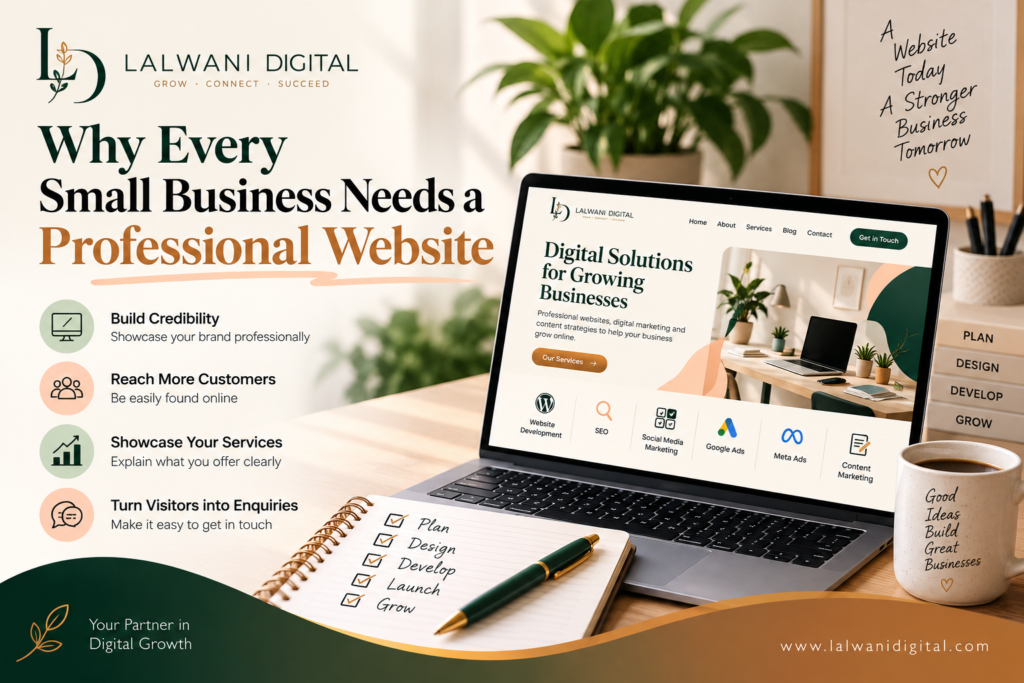
Running a small business involves more than offering a good product or service. Business owners also need to help people discover their work, understand what they offer, and feel comfortable reaching out. In a world where customers regularly use the internet to research their options, having a professional website can make this process much easier.
Imagine a customer hearing about a local business through a friend’s recommendation. Before making contact, they may search for its name, look at its services, or try to find its contact details. If the business has a well-organised website, the customer can find the information they need without difficulty.
This is one of the practical reasons why a professional website matters. It gives a business a dedicated space to introduce itself, explain its offerings, and communicate with potential customers.
For small businesses planning to develop their digital presence, a website can become a valuable foundation for future marketing activities.
How Does a Professional Website Support a Small Business?
A business website works as a central information point. It brings important details together instead of leaving customers to search through different platforms.
For example, a bakery could use its website to display its menu, share photographs of its products, mention its opening hours, and provide directions. A consultancy could explain its services, introduce its team, and offer a form for booking an initial discussion.
The purpose is to make information accessible and useful.
A website should reflect the actual needs of the business rather than simply follow design trends. When its content, layout, and features are planned carefully, it can support both customer communication and business operations.
7 Ways a Professional Website Can Benefit Small Businesses
1. Give Your Brand a Recognisable Identity
A business needs a consistent way to introduce itself to people who may not know it yet.
A website provides room to present the brand’s name, visual style, background, and services in a coordinated manner. Business owners can explain what makes their approach different and what customers can expect when working with them.
This is particularly useful for new businesses that are still building recognition.
Consider a home-based clothing brand. Through its website, it can display its collections, explain its design approach, and share information about ordering. Visitors get a clearer picture of the business before making a purchase decision.
A consistent presentation also helps connect the website with the brand’s social media profiles and other marketing materials.
2. Create More Opportunities to Be Discovered Online
A website gives search engines pages that can be indexed and displayed when people look for relevant information.
Businesses can improve their chances of appearing in suitable search results by creating helpful content, using descriptive page titles, organising information logically, and following basic SEO practices.
For example, a person searching for a particular service may discover a business through an informative article or a dedicated service page.
Search visibility does not happen automatically. It requires ongoing attention to content quality, technical performance, and the needs of the intended audience. However, a properly developed website provides a starting point for these efforts.
3. Explain Your Services Without Confusing Visitors
A short advertisement or social media post cannot always answer every question a potential customer may have.
A website allows businesses to provide fuller explanations through individual service pages.
These pages can cover:
- What the service includes.
- Who may benefit from it.
- How the process works.
- What customers should prepare.
- Relevant examples or previous work.
- How to request further information.
For instance, a digital marketing agency can create separate pages for SEO, social media management, and paid advertising. Each page can explain the service in detail instead of placing everything into one long description.
This makes information easier to understand and helps visitors explore the services that interest them.
4. Keep Important Information Available at Any Time
Customers do not always look for information during business hours. Some may browse late in the evening, while others may research a company during a break at work.
A website allows them to explore essential details at a convenient time.
Depending on the business, this may include:
- Product descriptions and photographs.
- Service information.
- Business hours and location.
- Delivery or booking details.
- Contact information.
- Enquiry forms.
A website cannot replace personal customer support, but it can answer many basic questions before a conversation even begins.
This can also reduce the time business owners spend repeatedly sharing the same information.
5. Connect Your Marketing Channels
Digital marketing activities become easier to coordinate when they lead visitors towards a relevant website page.
Each channel can serve a different purpose:
- Search engine optimisation: Helps relevant pages reach people looking for specific information.
- Social media marketing: Introduces the brand through posts, videos, and conversations.
- Google Ads: Directs interested users towards pages related to their searches.
- Content marketing: Provides articles and resources that address customer concerns.
- Email marketing: Shares updates and directs subscribers towards useful website content.
For example, a business could publish a social media post about a new service and link directly to its service page. Interested visitors can then read the details and submit an enquiry.
The website connects these activities and gives visitors a clear next step.
6. Help Visitors Feel More Comfortable Choosing Your Business
People often want to understand a business before deciding whether to contact it.
A thoughtfully prepared website can answer their concerns by presenting clear and accurate information.
An About page can introduce the business and its background. A portfolio can demonstrate the type of work it undertakes. Genuine testimonials can share customer experiences, while detailed service descriptions can explain what is included.
For a new business without an extensive portfolio, honesty is especially important. It is better to present current capabilities accurately than to make claims that cannot be supported.
Trust develops through clear communication and a consistent experience, not simply through attractive design.
7. Turn Website Visits Into Meaningful Enquiries
Getting visitors to a website is only one part of the process. Businesses also need to make it easy for interested people to take action.
A clear button, contact form, or booking option can guide visitors towards the next step.
Depending on the business model, useful actions may include requesting a quotation, arranging a consultation, calling the business, or exploring a product.
The wording should match the action. For example, a service provider might use “Request a Consultation” rather than a vague button that simply says “Click Here.”
Forms should also remain straightforward. Asking for only the necessary details can make the enquiry process more convenient.
Important Features to Include on a Small Business Website
A successful website does not need complicated functions from the beginning. It needs a reliable structure and features that serve its visitors.
Responsive Layout
The website should adjust to mobile phones, tablets, and desktop screens. Text, images, menus, and buttons must remain comfortable to use on different devices.
Clear Page Structure
Important information should be arranged in a logical order. A simple menu and descriptive headings help visitors understand where to look.
Optimised Images
Large image files can affect loading speed. Using appropriately sized and compressed images can help pages load more efficiently without sacrificing visual quality.
Useful and Updated Content
Business descriptions, prices, service details, and contact information should reflect the current situation. Outdated information can create unnecessary confusion.
Basic SEO Setup
Relevant page titles, meaningful headings, descriptive URLs, and useful content help search engines interpret the website.
Security and Maintenance
Regular software updates, backups, secure connections, and suitable protection measures are important for keeping a website functional and reliable.
Website Mistakes That Can Affect the Visitor Experience
Some businesses invest time in building a website but overlook details that influence how people use it.
Here are a few issues worth avoiding:
Unclear messaging: If visitors cannot understand the business quickly, they may struggle to identify whether its services are relevant to them.
Overcrowded layouts: Too many colours, animations, pop-ups, or competing elements can make important information harder to notice.
Poor mobile presentation: Small buttons, difficult menus, and text that does not fit the screen can discourage mobile visitors.
Missing contact options: Visitors should not have to search extensively to find a phone number, email address, or enquiry form.
Neglected updates: Broken links, outdated content, and non-functioning forms can reduce the usefulness of a website.
Ignoring performance: Slow pages can interrupt the browsing experience, particularly for people using mobile connections.
Reviewing these areas regularly can help maintain a website that remains useful as the business develops.
A Simple Plan for Building Your First Business Website
Starting a website project becomes more manageable when the work is divided into clear stages.
- Decide what the website should achieve. Identify whether your main goal is to generate enquiries, showcase products, provide information, or support sales.
- Learn about your audience. Consider the questions customers ask and the information they need before making a decision.
- Prepare the website structure. Plan essential pages such as Home, About, Services, Blog, and Contact.
- Write the content. Use straightforward language to explain your business and its offerings.
- Select an appropriate platform. WordPress is one option for businesses that want flexibility in managing their website.
- Plan the design around usability. Choose readable fonts, suitable colours, clear navigation, and a layout that works on mobile devices.
- Test before publishing. Check links, forms, images, page speed, and mobile layouts.
- Maintain the website after launch. Review its content, update software, and make improvements as the business receives feedback.
A website does not have to be perfect on its first day. It should provide a dependable starting point that can be improved as the business gains experience.
Building a Professional Online Presence With Lalwani Digital
At Lalwani Digital, the focus is on helping businesses establish a clear and consistent presence across digital channels.
A website plays an important role in this process. It provides a place where visitors can learn about a brand, understand its services, and explore the information shared through other marketing activities.
Our services include WordPress Website Development, SEO, Social Media Marketing, Google Ads, Meta Ads, and Content Marketing.
These areas can complement one another when planned around a business’s goals and audience.
For businesses preparing to launch their first website or improve an existing one, the priority should be to create an experience that is practical, easy to navigate, and aligned with their brand.
Final Thoughts
A small business website is not simply another item on a digital checklist. It is a useful resource for explaining what a business does, helping customers find information, and connecting different marketing activities.
Its value comes from how well it serves the people who visit it. Clear content, thoughtful design, accessible contact options, and regular maintenance all contribute to a better experience.
For business owners planning their next stage of growth, investing time in a professional website can help establish a stronger foundation for their online activities.
At Lalwani Digital, we believe that a well-planned digital presence begins with understanding the business and creating solutions that support its actual needs.
Explore Lalwani Digital’s website development services and take the first step towards presenting your business professionally online.